Tick, Tick, Boom: The Secret 72-Hour Clock That Makes or Breaks Every Major Release
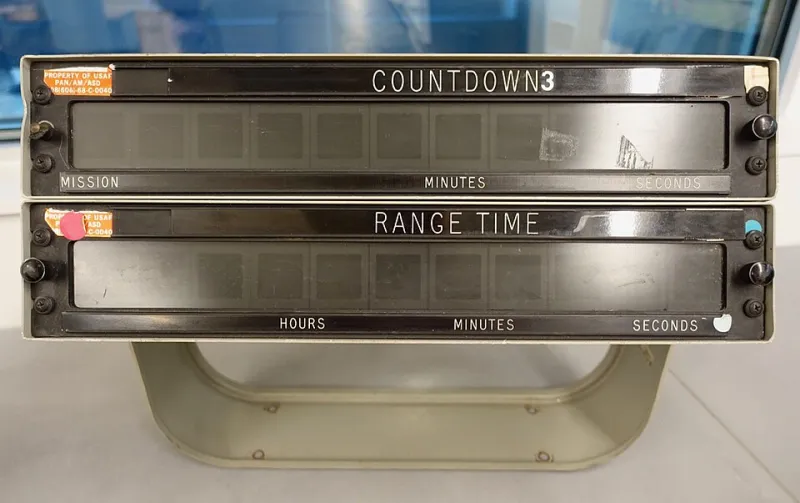
Photo: jurvetson, CC BY 2.0, via Wikimedia Commons
Somewhere between the moment a piece of content hits the internet and the 72-hour mark after it lands, something decisive happens. The culture either grabs it and runs, or it gets filed away into the massive graveyard of things we almost cared about. Studios know this. Labels know this. Streaming platforms definitely know this. And increasingly, they're building entire campaign strategies around a window that most casual fans don't even realize exists.
Call it the Golden Window. Call it the 72-Hour Rule. Whatever name you give it, the math is brutally simple: if your release doesn't generate enough social heat, search volume, and genuine word-of-mouth within the first three days, the algorithm stops doing you any favors — and recovery becomes nearly impossible.
Why 72 Hours? The Numbers Behind the Cutoff
It's not an arbitrary figure. Platform data across Spotify, YouTube, Apple Music, and major streaming services consistently shows that content engagement curves peak hard within the first day, plateau through day two, and begin their decline by the back half of day three. After that, the algorithmic recommendation engines — which are essentially the gatekeepers of discovery — start redistributing their attention to whatever's new and generating buzz right now.
For music specifically, Billboard's chart tracking methodology factors heavily in that opening window. A song that racks up streams and sales in its first 72 hours has a dramatically better shot at landing high on the Hot 100, which then feeds a second wave of visibility. It's a flywheel effect, and the flywheel has to start spinning fast or it doesn't spin at all.
For films, opening weekend box office — which is essentially a 72-hour snapshot — still functions as Hollywood's primary signal of whether a movie is a cultural event or a quiet disappointment. Even in the streaming era, where numbers are murkier, platforms like Netflix and Amazon watch first-weekend viewing hours like a hawk.
The Campaigns That Cracked the Code
Let's talk about what nailing the window actually looks like in practice.
When Beyoncé dropped Renaissance in 2022, the rollout wasn't accidental chaos — it was a precision operation. The album announcement came with just enough lead time to build anticipation without letting it cool. The actual release dropped at midnight, flooding social platforms during peak overnight engagement hours on the East Coast. By the time most Americans woke up on a Friday morning, the conversation was already everywhere. That 72-hour window was essentially pre-loaded before the clock even started.
Similarly, the marketing team behind Top Gun: Maverick understood that their biggest asset wasn't the budget — it was nostalgia, and nostalgia has a short shelf life once you start poking at it. They timed the final trailer drop to land during the Super Bowl, then rode that wave directly into a release date that kept the momentum alive. The film opened to $160 million domestically. The window was respected, and the window delivered.
On the streaming side, HBO's rollout for The Last of Us is practically a masterclass. They released the first episode and immediately flooded the zone with behind-the-scenes content, cast interviews, and carefully placed critical reviews — all within that opening 72-hour stretch. By the time Sunday night turned into Monday morning, the show wasn't just a premiere; it was a conversation you couldn't avoid.
When Brands Miss the Window — And Pay for It
The flip side is equally instructive, and honestly more interesting to pick apart.
Remember when Netflix dropped The Gray Man in the summer of 2022 with a reported $200 million budget and somehow managed to generate almost zero cultural momentum? The film had the stars (Ryan Gosling, Chris Evans), the action credentials, and the platform. What it didn't have was a focused 72-hour push that gave audiences a reason to feel urgency. It arrived, it was fine, and it evaporated. No meme cycle, no discourse, no second-weekend bump from word of mouth. The window opened and closed without anyone really noticing.
The music world has its own version of this story playing out constantly. Mid-tier artists dropping albums without coordinated rollouts — no singles pre-seeding familiarity, no social media coordination, no press timing — often find themselves staring at decent first-day numbers that collapse by day three. Without that early momentum, playlist placement disappears, and with it goes the discovery engine entirely.
Even major artists aren't immune. Several high-profile drops over the past few years have stumbled because the rollout felt scattered — too much information too early, or a surprise drop that didn't give the fanbase enough time to mobilize before the algorithm moved on.
The Playbook: What the Smart Teams Are Actually Doing
So what does a well-executed 72-hour strategy actually look like from the inside?
First, there's the pre-seeding phase — the deliberate leaking of anticipation in the days just before release. Cryptic social posts, strategically placed press exclusives, fan community teases. The goal is to make sure a primed audience is ready to act the moment the content drops.
Second, there's the drop timing itself. Friday releases for music exist for a reason: they align with weekend social activity and give the full Friday-Saturday-Sunday cycle to build momentum before Monday's chart data gets pulled. Movie releases follow the same logic with Thursday night previews feeding into Friday opens.
Third — and this is where a lot of campaigns fall apart — there's the post-drop content flood. The behind-the-scenes clips, the reaction compilations, the creator partnerships, the late-night appearances, the playlist placements. All of it needs to be coordinated and ready to deploy immediately after release, not assembled on the fly.
Finally, the teams that really know what they're doing build in a 48-hour check-in. If the numbers are tracking well, they double down. If they're lagging, they pivot — sometimes dramatically — to find a different angle that might still catch a spark before the window closes.
The Culture Moves Fast. The Window Moves Faster.
Here at 77 Buzz, we track a lot of numbers, and one thing that keeps showing up in the data is how unforgiving the current entertainment landscape has become for anything that doesn't immediately justify its own existence. The audience's attention isn't just limited — it's actively being competed for by thousands of releases every single week.
The 72-hour rule isn't a guarantee. Plenty of things have blown up outside of it, and plenty of perfectly timed campaigns have still flopped. But as a framework for understanding why some releases feel inevitable and others feel invisible, it holds up remarkably well.
Next time something drops and you feel that pull — that sense that you have to watch it or listen to it right now — there's a decent chance someone engineered that feeling very deliberately. And they probably had exactly 72 hours to make it stick.